
Too Young to Worry? My Experience Getting a Mammogram at 25
A first-person perspective on breast cancer awareness, family history, and the importance of being heard.
At Pillar Patient Advocates, we believe every patient’s voice deserves to be heard. In this personal story, a young woman shares her experience navigating breast cancer screening at 25—and why advocating for your health matters at every age.
Who knew that trying to be proactive about your health could be so difficult?
We hear so much about breast cancer awareness: pink ribbons, early detection, and reminders to get screened. But at 25, I found that actually trying to get a mammogram can feel surprisingly lonely.
I understand why routine mammograms generally begin at 40 for women at average risk. Breast cancer is less common in younger women, and those guidelines exist for a reason. But family history doesn’t always fit neatly into an age recommendation.
When Family History Makes Breast Cancer Personal
My maternal aunt was diagnosed with breast cancer by 30 and passed away at 45. Several other close relatives have faced breast cancer, including family members who did not carry a known genetic mutation. With that history, it’s hard to simply tell myself I’m too young to worry.
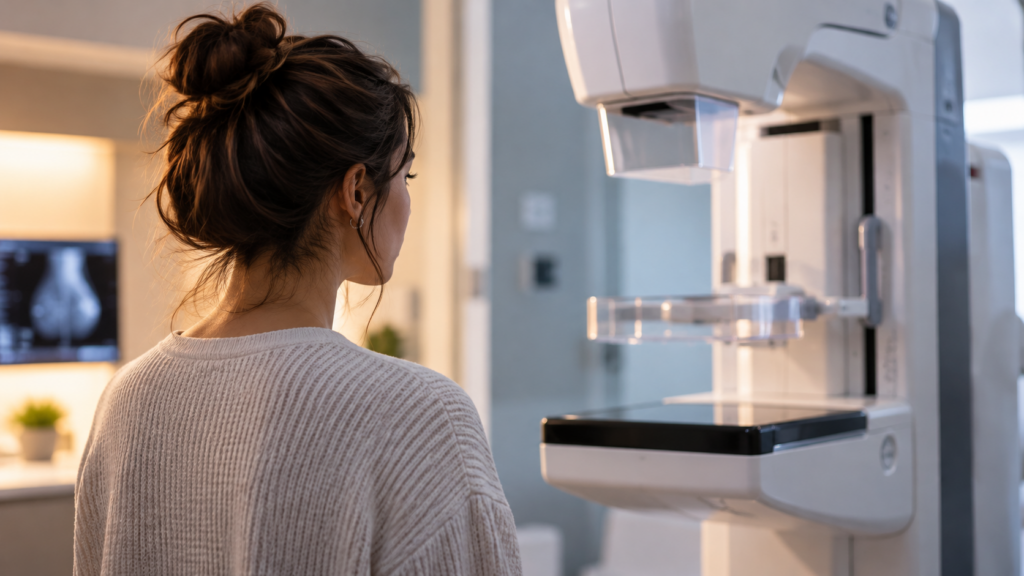
Thankfully, my OB-GYN listened to my concerns and ordered a mammogram. I thought that would be the hard part.
The Challenges of Getting a Mammogram at 25
Finding a facility was more difficult than I expected. Appointments were inconvenient, some locations were far away, and when I asked friends for recommendations, I realized none of us were old enough to have gone through this.
I live in a suburban area with options, and I couldn’t help wondering how much harder it might be for someone with fewer resources.
Even after scheduling the appointment, I felt I had to keep explaining why I was there. I was questioned about my age and told that my affected relatives weren’t first-degree relatives. I understand that matters when assessing breast cancer risk, but it didn’t make my family’s experiences or my fear any less real.
The mammogram was already a vulnerable, anxiety-inducing experience without feeling like I had to justify it.
When My Mammogram Showed Something Unexpected
Then the imaging showed a mass or shadow.
I was told it was most likely benign, but I needed to return in six months to make sure nothing had changed.
I was relieved, of course, but also shaken. After being made to feel that I was too young to need screening, hearing that something required monitoring was hard to process.
Why Breast Cancer Awareness Matters for Younger Women, Too
I’m not saying every woman in her twenties needs a mammogram. Earlier screening isn’t automatically better, and medical guidelines matter. But so does being heard.
According to the American Cancer Society, approximately 1 in 10 women diagnosed with breast cancer are younger than 45. While breast cancer is less common in younger women, these numbers are a reminder that age alone doesn’t tell the whole story.
Certain aggressive types of breast cancer are also more common among those diagnosed young. A concerning family history deserves a thoughtful, individualized conversation—not immediate dismissal.
For women with a family history of breast cancer, understanding personal risk and discussing appropriate screening options with a healthcare provider can be an important part of taking charge of their health.
For a disease surrounded by so much awareness, I wish the process had felt more supportive. We’re told to know our bodies and advocate for our health, yet doing so can feel like an uphill battle.
Breast cancer awareness should be more than pink ribbons and reminders to schedule a mammogram at 40. It should also mean listening to young women who are scared, asking questions, and trying to take their health seriously.
Being Young Shouldn't Mean Being Unheard
If there’s one thing this experience has taught me, it’s that advocating for your health isn’t always easy, but your concerns deserve to be heard.
I still have questions. I still have moments of worry. And I still have a follow-up appointment ahead of me. But I also have hope.
Hope that sharing my experience might help another young woman feel less alone. Hope that more conversations about breast cancer will include younger women and those with complicated family histories. And hope that, with greater awareness, compassion, and understanding, advocating for our health will become a little easier for all of us.
Because being young shouldn’t mean being unheard. And every woman deserves to feel supported, informed, and empowered to take her health seriously—at any age.
Your Voice Matters. Your Health Matters.
Ask questions. Trust your instincts. Seek support, and never be afraid to advocate for yourself. Your concerns deserve to be heard, no matter your age.
And whenever possible, consider participating in healthcare research. By sharing our experiences and lending our voices, we can help improve care, break down barriers, and make the journey a little easier for the women who come after us.
Because every voice matters, and together, we can help create a future where no woman feels unheard.